 BePuzzled Puzzle Rooms

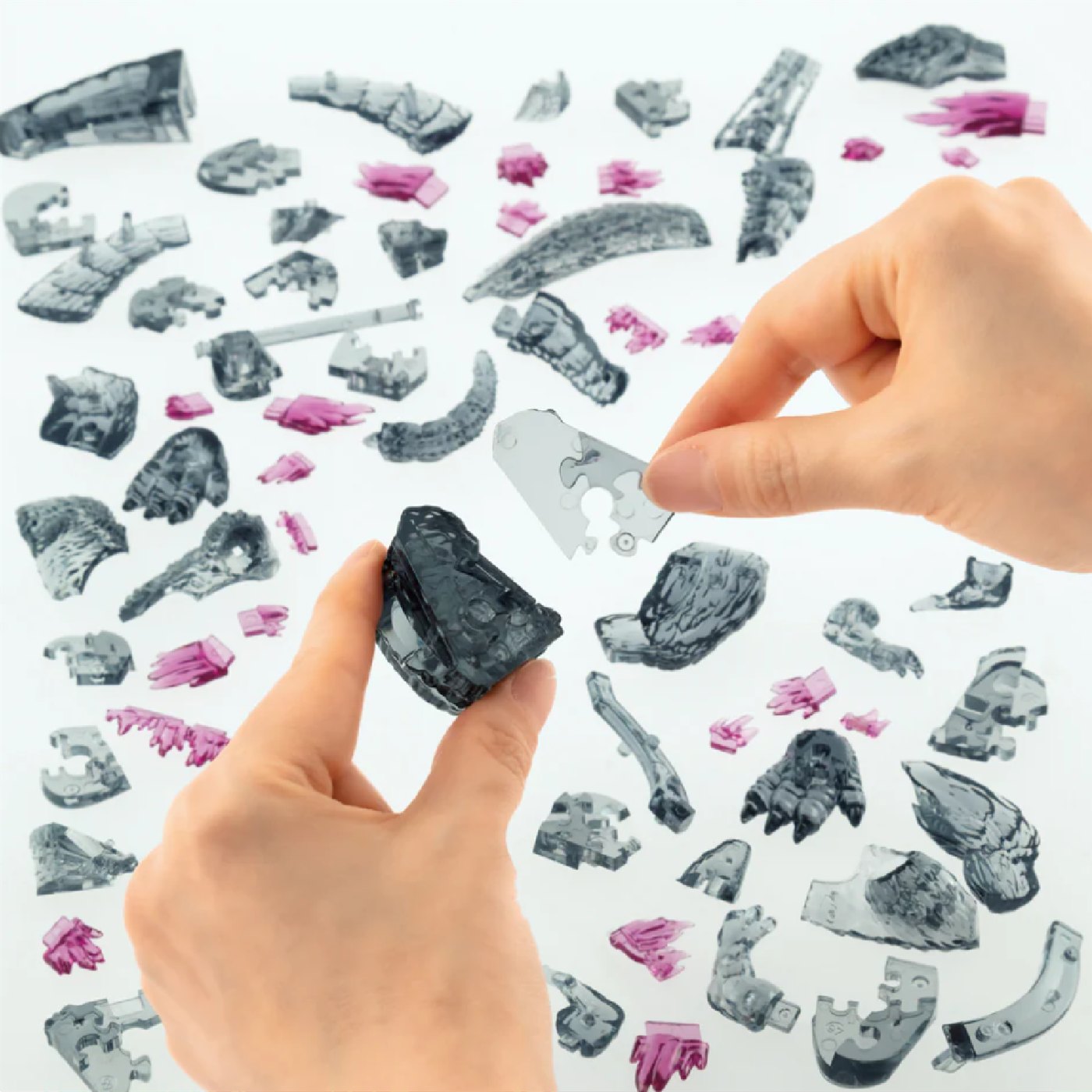
Empty the bag onto something pale.
Clear and smoked pieces disappear against a dark table. We use a white tea towel: it stops pieces rolling, shows the bevels, and lets you sweep everything back into the box at the end without hunting under the sofa.
Find the base ring before anything else.
Nearly every crystal build starts with a closed ring of flat-bottomed pieces. Pull out everything with one perfectly flat face and fit those together first. If the ring will not close, you have an extra piece in it, not a missing one.

Read the bevel, not the color.
Pieces of the same color rarely belong together. What matters is the angle of the cut face: a steep bevel belongs high on the model where the shape narrows, a shallow one sits low. Hold two pieces up to a lamp and the matching angles become obvious.
Build in layers and do not push.
Work a complete horizontal layer before starting the next. Crystal pieces seat with light thumb pressure; if a piece needs force it is the wrong piece, and forcing it will scuff the face in a way that catches the light forever.
The numbered sheet is a map, not a defeat.
The folded diagram numbers every piece in build order. Most people hold out until the model is two-thirds up and then use it to settle an argument about a wing. That is exactly what it is for.
Finish, then take it apart once.
The second build teaches you more than the first. You stop reading the diagram, you start reading the shape, and the next crystal puzzle you open goes together in half the time.